
Photographing in Black and White: One Month with Ilford’s HP5 Plus 400 and Delta 3200 35mm Film Stocks
I recently became a member of the New Dad Club a couple of months ago as my daughter was born. I remember a lot of nerves leading up to the big day as I thought about anything and everything that could happen at the hospital and how to adjust to life within a new family dynamic as I step into new roles as a partner, provider, and parent. It is pretty surprising then that in the midst of stroller shopping and crib building and baby prepping, there was still one thought that permeated my mind every once in a while: “But what camera do I bring?” It turns out I will still take a picture even in the midst of dramatic life changes.
Black and white became the natural choice here with everything; how colors look is the last thing on my mind. I also knew the hospital would be dark at times with unpredictable light sources, meaning a 3200 ISO film is probably for the best just in case. I had great results in the past with Ilford Delta 3200 for those exact same reasons.

St. Augustine, FL 2022
Ilford Delta 3200 in the Olympus OM-1

Metro Boomin concert, SATX 2024
Ilford Delta 3200 in the Olympus Infinity Stylus
According to their website, Ilford is a company with roots dating back to the 1890’s in the UK as Alfred Harman was making dry plates in his basement. Today, the company manufactures imaging needs under the name HARMAN Technology. Ilford is the name for one of the brands that Harman encompasses, mostly doing black and white film, paper, and developers. This brings us to where I am at now, shooting HP5 Plus 400 and Delta 3200, both a part of the Ilford brand.
Let’s start with Delta 3200. This was the one I first picked up and what drew me to it is the high sensitivity is has to light, as denoted by its ISO rating of 3200. A film’s sensitivity helps mark the type of image the photographer is to expect when shooting with it since a certain amount of light is needed for an image to be properly exposed and burned onto the film. For comparison, the other films in Ilford’s Professional Delta line include 100 and 400 ISO rated films (or “speed” for shorthand), and while 400 speed film is generally considered a “high” ISO film, we can see that the 3200 rating of its older cousin is considerably higher. This means that since it is more sensitive to light, the film does not need as large amount of light for the film to be burned (in fact it only requires three times less light than the 400 speed film in order to come away with a properly exposed image).

We have attempted to put her in the swing a couple of times. One day, she will learn to like it.
Ilford Delta 3200 in the Olympus Infinity Stylus
If you are looking at the example above and think it looks rougher than sandpaper on steroids, you would not be the only one. There is a drawback with higher ISO rated films in that they reveal much more of what physically goes on underneath the surface of the film that we enjoy shooting so much. Each film (black and white, that is) is composed of these tiny, microscopic specks called silver halide crystals that will become apparent to some degree when the film is exposed to light. This is the oh-so coveted film grain that many analogue photographers chase in their aesthetics. How much of the grain we see is in part dependent on the ISO rating, and since Delta 3200 is more sensitive to light, it is going to expose the grain so much more than a lower, finer-grained film like the aforementioned Delta 100. The grain cannot be completely invisible, but it can be somewhat refined and reigned in during the manufacturing process. Ilford for their Delta line boasts a “tabular” grain structure, meaning it has a smoother texture as opposed to “cubic” grain which is, for lack of a better term, the grit and the texture that many associate with photographs from the past. T-grain was not introduced until much more recently with Kodak’s T-MAX line in the late 1980’s and Ilford’s Professional Delta films in the early 90’s; pretty much every other black and white film beforehand features a primarily cubic grain structure.
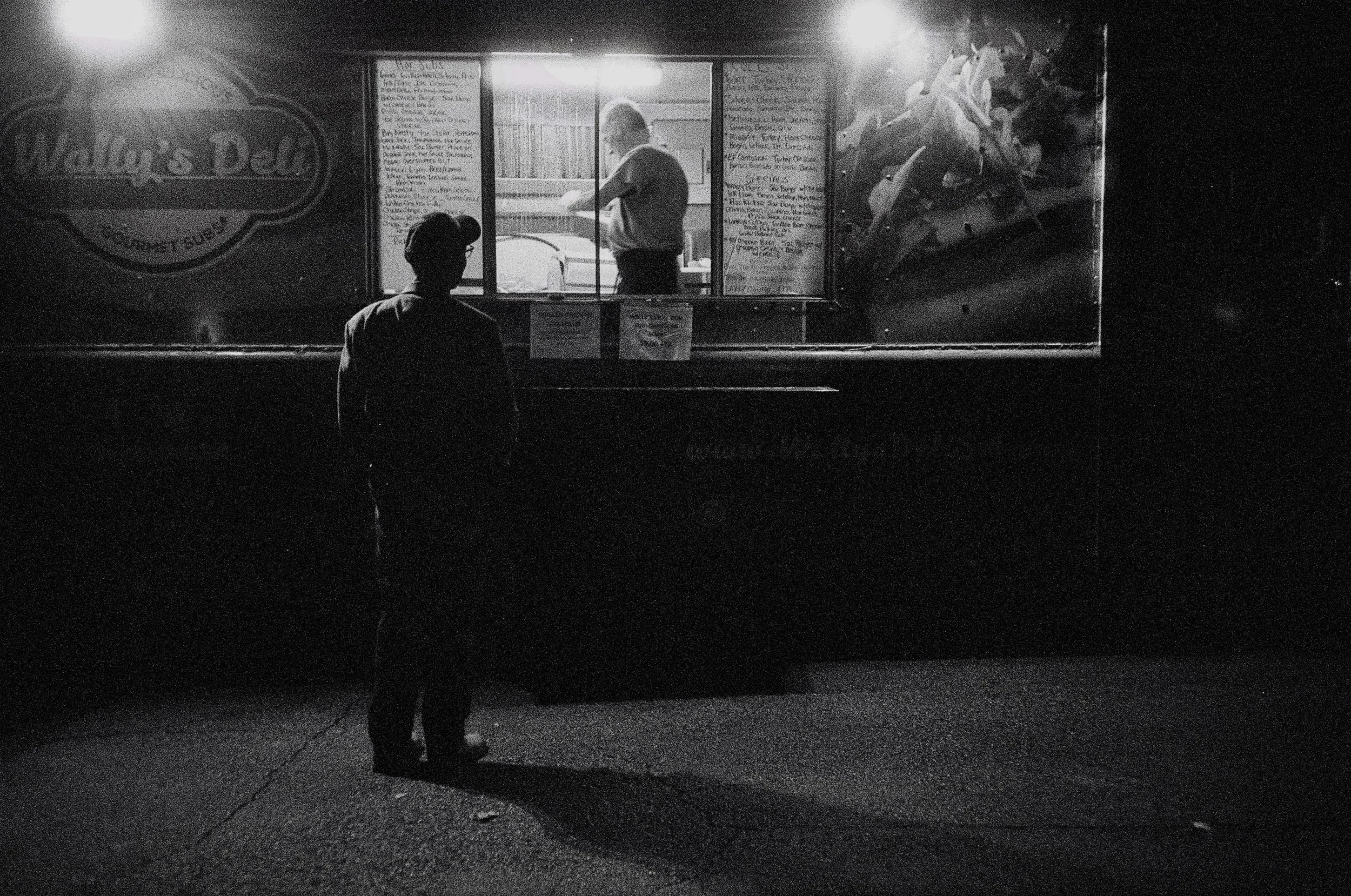
Wally’s Deli, 2025
Ilford Delta 3200 in the Olympus Infinity Stylus
Looking at it here, the smoothness of the T-grain does not really come across as much. The texture here is apparent to a high-degree and I find that in certain situations, it really does literally blur the lines between one subject to the next as the images lose a bit of definition. However, that can be attributed to a couple of different things. First, focus. These were all shot in a small point-and-shoot camera since there was no way I was going to bring a larger setup with different lenses and manual exposure settings in the hospital. Our baby is going to be adjusting to the outside world and the last thing she needs is an SLR with a big 50mm f1.2 lens slapped right in front of her. I just wanted something automatic, but it does mean that I cannot check critical focus as I take the shot, and a lot of it comes down to just hoping that everything that I want is sharp. The point-and-shoot camera I have, the Olympus Infinity Stylus, does miss focus quite a bit in my experience. I am not sure if it is just me not composing correctly or if I am going too quickly when taking a shot, but it does mean that the slightly out-of-focus images have a little less resolve than I would hope for. The second thing to affect the image quality is the film scanning process, and I have only ever used one lab pretty much my entire film photography tenure and I consistently get pretty grainy results with this film. I might want to consider shooting this film in a more manual camera and digitizing the negatives with my own scanning setup for next time.

A quick swaddling sesh. We learned pretty quickly we would need to get used to this.
Ilford Delta 3200 in the Olympus Infinity Stylus
All of that said, I do love this film. Grain is not always bad, and sometimes it really does add a certain something that is hard to explain. I think it reminds people of a timeless feel and helps to play into the nostalgia and the vintage quality to an image, something that I think is made extra special with our new addition to the family. It reminds me of older photos of me that my parents had, and it is cool to be able to continue that and pass those feelings down to my child as well.
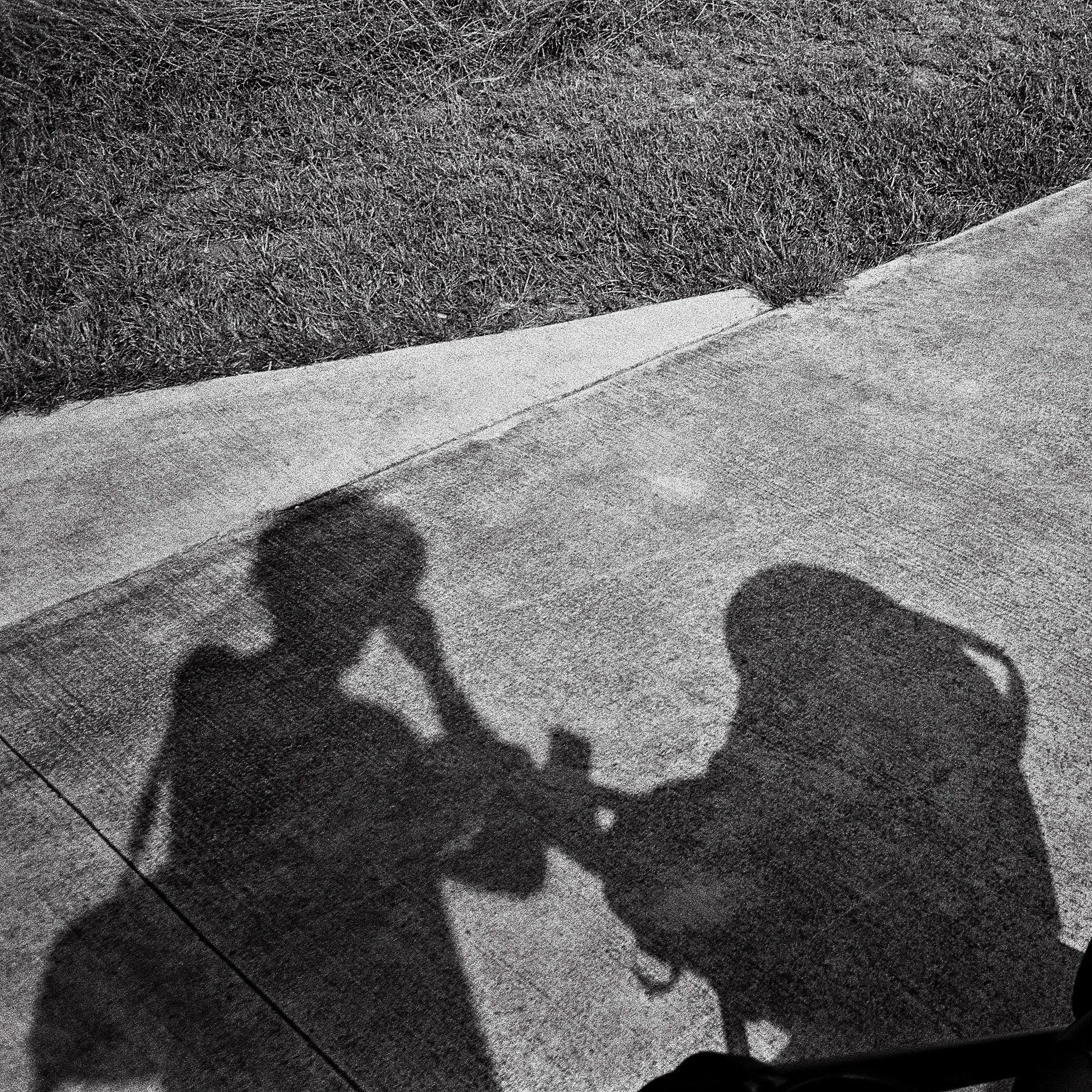
One of baby’s first walk outside
Ilford HP5 Plus 400 in the Olympus Infinity Stylus
This brings us to the next film I shot, mostly after coming home from the hospital with our daughter. I was gifted three rolls of HP5 Plus film, a 400 speed black-and-white film stock also made by Ilford Photo. It is not a part of the Delta Professional line, but it is worth noting that most film photographers have been using this as their go-to black and white stock for a long while with its introduction dating back to 1931, and then the next iteration as HP2 and so on and so forth until the latest HP5 Plus release to the market in 1989. This has been a popular choice for black-and-white photography for about 95 years and it does show in its quality.
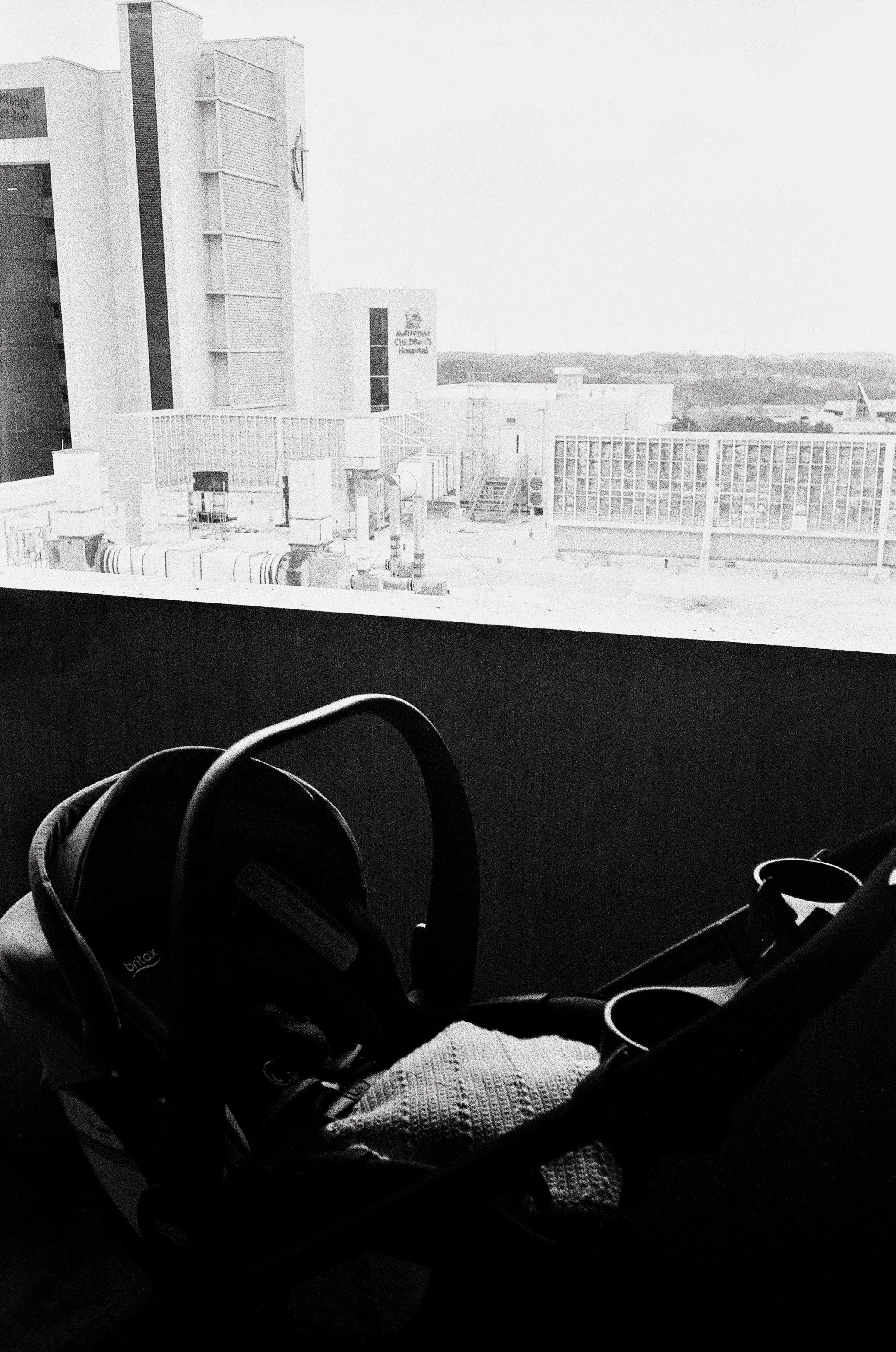
One of her first appointments
Ilford HP5 Plus 400 in the Olympus Infinity Stylus
First off, it is a 400 speed film (at least this most recent iteration is) making it high enough for any kind of general, all-purpose shooting. I threw a roll into the Olympus and just kind of let it do its thing in pretty much anywhere I was at, both indoors and outdoors. It also has a broad range of tonality across the spectrum, meaning it renders grays in such a smooth way as the colors in the scene are captured in black and white, giving definition and range to the images. The standout characteristic of this film though is just how far it is willing to be pushed to the limit to get the images.
What I mean is that I do not have to shoot and process it at the ISO rating that the box says that it is, otherwise known as “box speed”. For this other roll, I put into my Ricohflex TLS and instead of exposing the image for its 400 speed rating, I reduced the amount of light needed by instead rating it at 1600 ISO instead. Not as much as the 3200 from before, but just enough to really put the film through its paces. I did this mostly because A.) I just wanted to try it and B.) I knew that we would be spending lots of time at home with our baby so being inside means just needing a little bit extra push to get the exposure I want. Because the film was rated at 1600 ISO, it technically received less light than it needs and then the developing process was extended slightly to make up for the underexposure.

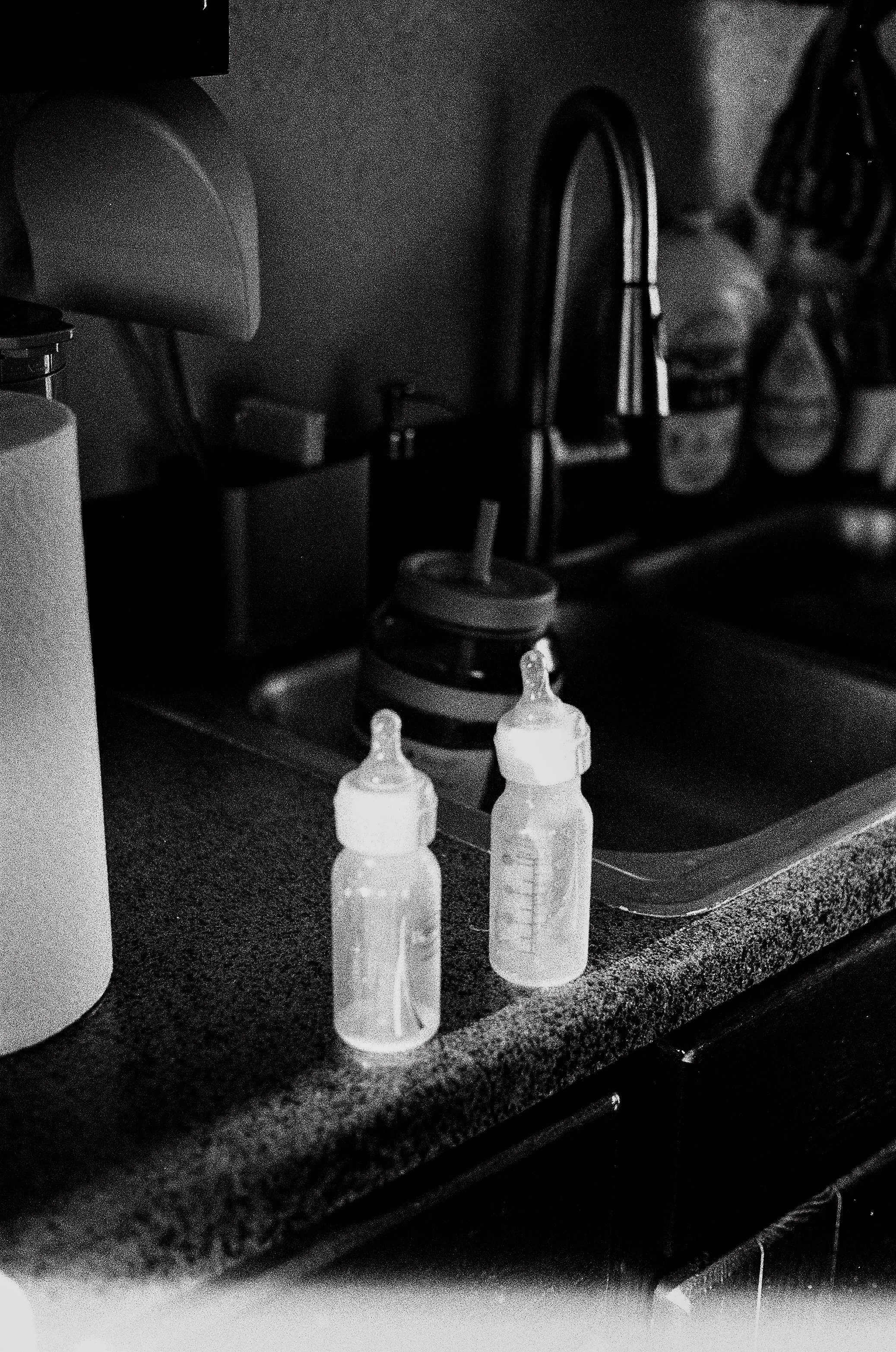
A couple frames of a typical morning scene for us now
Ilford HP5 Plus 400 +2 stops in the Ricohflex TLS 401
This introduces a couple of different characteristics to a film. First the contrast. Notice the images above do not have the same shades of gray as before, but are rather defined by the darkest part of the image, or the shadows, and the brightest part of the image, or the highlights. Because the film is given such an intense chemical bath when pushed, the contrast is increased quite a bit, especially when we are effectively giving the film only one-fourth of the light it needs. And like we talked about before, a higher rated ISO film means more noticeable grain in the image as it is being developed. The grain in these photos are different than before however. I think these are bit more smoother and sharper than the Delta 3200 and I see much more refinement in these images. This can be because of the manual camera I am using, but the grain structure and contrast here is in my opinion much more preferable than its higher-ISO Delta cousin, really showing just what this film is capable of.

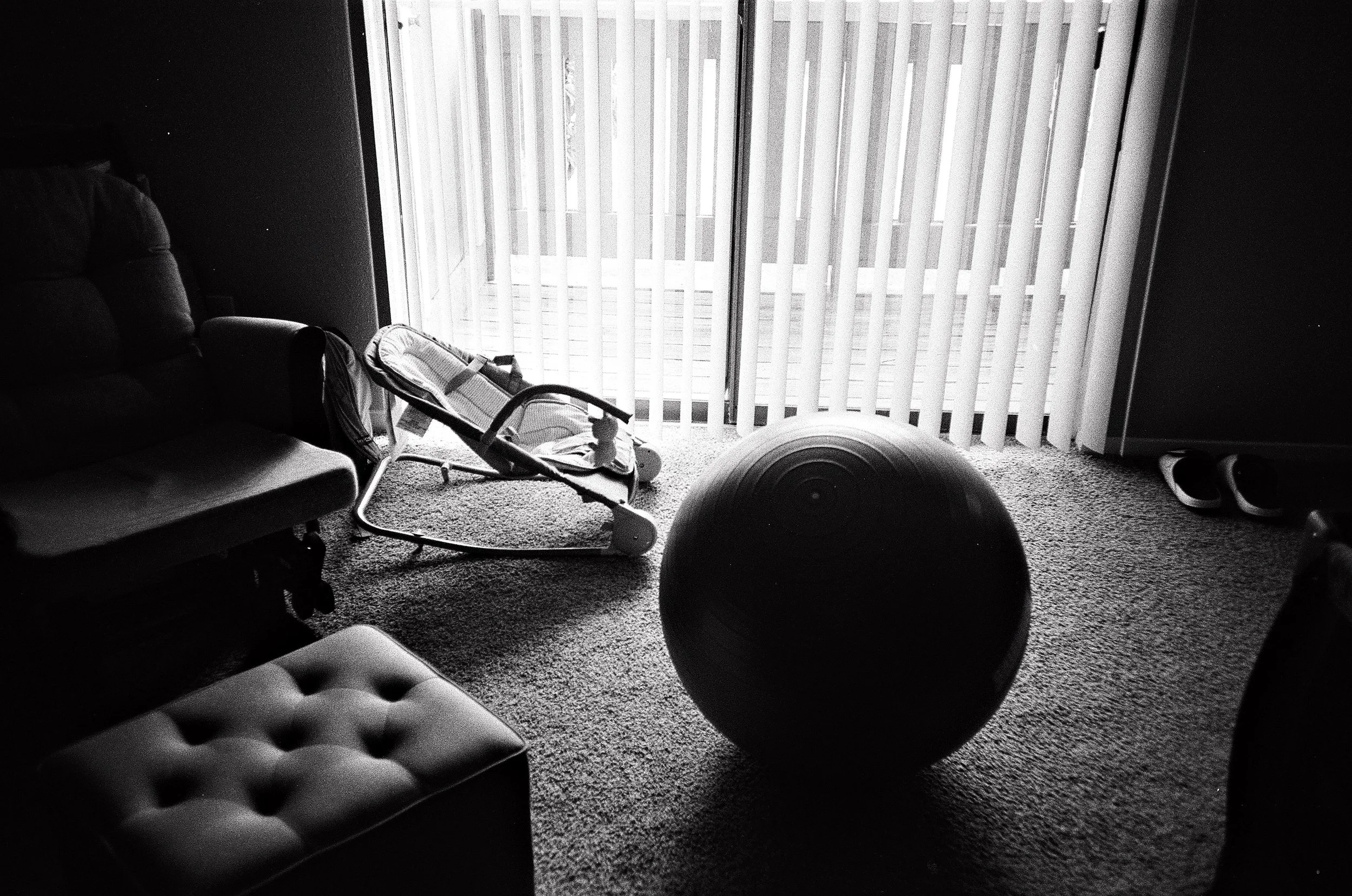
Yoga balls and light leaks with my two favorite people
Ilford HP5 Plus +2 stops in the Ricohflex TLS 401
Everybody told me that the time would go by so quickly with our baby, and I never understood what that meant until the first month was over. Just like that, she is that much older and closer to being the person that I am proud to help raise. It can be emotionally overwhelming and sometimes I doubt my ability to be the father she wants me to be. The process and results of working with these films remind me to keep showing up, to be present, to be strong, and to be an unconditional love for my daughter. Everything I do is for her; I know she deserves nothing less.
Christian
